North Texas roofs live hard. Rockwall sits on the eastern edge of the DFW heat dome and takes a direct hit from spring hail tracks and late‑season wind events. A roof that works in milder climates will not hold up long here. Material choice matters more than marketing claims. It affects leak risk, energy bills, and how insurers view a claim after a storm. This guide compares the best roofing materials for Rockwall homes and commercial properties, based on field performance through heat waves, UV exposure, high-velocity winds, and large hail.
While the focus is Rockwall, homeowners in Grand Prairie, Arlington, and the larger DFW corridor will find the same weather pressures. For property managers near the Great Southwest Industrial Park or along Joe Pool Lake, the lessons apply one-to-one. SCR, Inc. General Contractors operates across Dallas and Tarrant counties as a roofing contractor Grand Prairie clients bring in for both residential and commercial projects, especially after major hailstorms.
What Rockwall heat and storms do to a roof
Heat breaks down the surface of shingles and roof membranes. UV accelerates aging and dries out oils in asphalt. Thermal shock hits when a dark roof cooks at 160°F mid-day, then cools rapidly after a storm front. Hail strikes bruise shingles and shatter protective granules. On flat roofs, ponding water and clogged scuppers stress seams and flashing. Wind gusts pull at edges and coping caps, then exploit any weakness at HVAC curbs or along parapet walls. Over time, tiny gaps grow into wet insulation, swollen decking, and interior stains.
A roof that survives here does three things well. It sheds water fast. It resists impact and UV. It stays intact at seams and edges. Material selection and the details around penetrations make the difference.
Asphalt shingles: choosing impact resistance the right way
Most Rockwall homes use asphalt shingles. Not all shingles perform the same. A standard architectural shingle looks fine for the first few years, then loses granules and shows ridge cracking under heavy UV. Impact-rated shingles hold up better. The key is certification roofer Grand Prairie TX and proper accessory choices.
Class 4 impact-resistant shingles provide the best hail defense available in asphalt. They use reinforced mats that reduce bruising from 2-inch hail. Many insurers offer premium credits for Class 4 in Texas. In practice, the reduction in post-storm spot repairs is the real win. Brands with strong track records include GAF and Owens Corning. With GAF systems, a Master Elite installer can register extended warranties that cover both product and installation. That matters if a future leak traces to a flashing detail.
Underlayment and ventilation drive lifespan. Synthetic underlayment resists heat sag better than felt. In high-heat areas, a high-temp ice-and-water shield at valleys, eaves, and around pipe boots helps. Ridge ventilation paired with adequate intake at soffits reduces attic heat, which protects shingles and lowers summer cooling load. A roofer who ignores intake vents will shorten roof life, even with Class 4 shingles.
Edge metal, starter shingles, and sealed nails at the edges help resist wind blow-off. Hail can still bruise shingles hard enough to justify replacement. After a major cell passes across Lake Ray Hubbard and into Rockwall, a drone inspection can document hail patterns and guide an insurance claim.
Metal roofing: longevity and wind resistance with a few caveats
For homes with strong framing and simple rooflines, standing seam metal is a top choice. It reflects heat, handles wind well, and lasts 40 to 60 years when installed with proper gauges and clips. Kynar 500 finishes resist UV fade and chalking. In Rockwall, the color choice matters. Light or “cool roof” colors reduce attic temperature and cut cooling costs. On complex roofs with many valleys or dormers, metal adds detailing labor and risk at seams. Use a contractor with sheet-metal chops, not a crew that relies only on pre-bent parts.
Hail will dent softer metals. That is cosmetic more than functional, but it matters for curb appeal and resale. Heavier-gauge steel dents less than aluminum. Stone-coated steel looks like tile or shake and hides small dings better. Fastener type matters too. Exposed-fastener panels age faster, as gaskets dry under UV. Standing seam with concealed fasteners avoids that failure path.
For homeowners near open water or flat, windy corridors, metal edges and properly fastened clip systems reduce blow-off risk. Regular checks at ridge caps and pipe boots will keep a metal system tight through storm seasons.
Tile roofing: excellent heat performance with weight considerations
Concrete and clay tile excel in heat and UV. They do not degrade experienced roofer Grand Prairie TX under sun like asphalt. Their mass buffers thermal swings, which reduces thermal shock on the deck. Tiles can crack under large hail, but underlayment and battens keep water out if the system is intact. Weight is the key trade-off. Many Rockwall homes need reinforcement to carry tile loads. If structure allows, a modern tile system with a high-temp underlayment delivers strong performance in Texas heat.
Inspectors often find failures at flashing—around chimneys, skylights, and sidewalls. Water intrusion comes from poor headlap or missing kick-out flashing more than from the tiles themselves. Homeowners should plan periodic inspections and quick replacement of broken tiles after hail.
Synthetic composites: impact strength with a lighter load
Composite shakes and slate look like natural products but weigh far less. The better systems carry Class 4 impact ratings and resist UV fade. They handle thermal shock well and shed water efficiently on steep slopes. For neighborhoods with strict style standards—like parts of Mira Lagos or Grand Peninsula—synthetics offer a clean look with improved durability. The main downsides are material cost and the need for certified installers to validate warranties.
Flat roofs for commercial and multifamily properties
Rockwall’s commercial roofs face different stress. Large, low-slope systems need strong seams, stable insulation, and reliable drainage. Material choice should match the building’s use, chemical exposure, and foot traffic patterns. For property managers who also operate facilities in Grand Prairie’s 75050 industrial zone or along retail corridors in 75052, consistency across sites simplifies maintenance and warranty management.
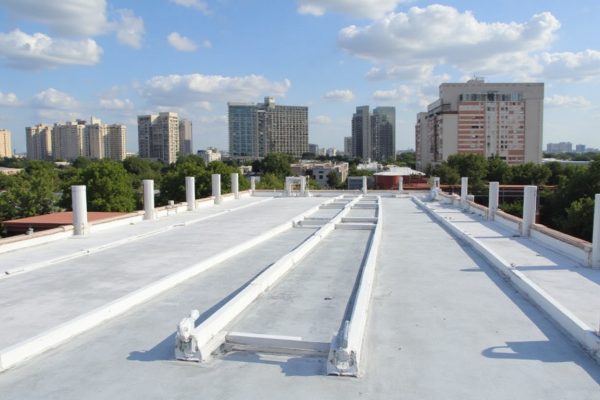
TPO (Thermoplastic Polyolefin) dominates DFW for good reason. It reflects heat, handles UV well, and offers welded seams that resist separation when installed correctly. White TPO lowers roof surface temperatures, which reduces heat gain. Brands such as Carlisle SynTec and GAF deliver proven membranes with strong warranty options. In high-wind locations, reinforced perimeter attachment with additional plates and fully adhered sheets near edges helps prevent billowing. Ponding water is a weak spot for any membrane; it leads to dirt accumulation, microbial growth, and surface breakdown. Proper crickets, tapered ISO insulation, and clear scuppers keep water moving.
PVC roofing provides strong chemical resistance for facilities with grease vents or industrial exhaust. It welds cleanly and offers high reflectivity. In DFW heat, high-quality PVC membranes with solid plasticizer packages hold up better over time. Sika Sarnafil sits high on the durability ladder. For restaurants, food processors, or labs, PVC beats TPO in exposure zones.
EPDM (rubber) resists UV cracking and handles temperature swings well. It is common on older buildings and remains a sound choice where white reflectivity is less critical or where ballast is part of the design. Seams are adhesive-based unless upgraded with specialty tapes. Hail can bruise EPDM over soft insulation, so a denser substrate helps.
Silicone and acrylic roof coatings extend life on aging flat roofs. Silicone stands out for ponding-water tolerance. On facilities that cannot shut down for a tear-off, silicone restoration can seal seams, add reflectivity, and earn 10- to 20-year warranties when applied to a suitable substrate. Gaco is a leader here. A coating strategy requires careful prep, adhesion testing, and honest moisture evaluation. Coating a wet roof traps problems and shortens life.
Components and details that decide success
Regardless of material, most leaks happen at details. Flashing failure, weak edge metal, and sloppy penetrations drive most service calls. The checklist for Rockwall and DFW roofs looks like this:
- Reinforced HVAC curbs, welded at all corners, with counterflashing that sheds water over the field membrane Secure coping caps with continuous cleats on parapet walls to resist wind lift Proper scuppers and downspouts sized to the roof area, with guards to reduce debris clogs Walkway pads that protect membranes around service routes to rooftop units Skylight and pipe boot systems rated for UV exposure and sealed to the specific membrane type
On commercial roofs, use infrared thermal cameras to find subsurface moisture in ISO board insulation after a storm. This verifies wet areas without opening the assembly across the entire surface. Targeted core cuts confirm findings. A data-backed map of wet zones helps decide between partial replacement, full replacement, or a coating restoration.
What works best for Rockwall homes by scenario
For a basic gable or hip roof with typical tree cover and full sun, Class 4 architectural shingles deliver the most value. Choose a cool-toned color that manages heat. Pair with synthetic underlayment, upgraded ridge ventilation, and high-temp ice-and-water shield at valleys. Homeowners who want a longer service life and better heat performance should look at standing seam metal with a Kynar finish. On homes with Mediterranean design cues, concrete tile—if the structure supports it—performs well in heat and provides strong curb appeal.
For hail-heavy pockets along common storm tracks, impact-rated products plus a deductible strategy make sense. Many local clients carry a wind-hail deductible between 1% and 2% of dwelling coverage. Class 4 shingles may reduce premiums enough to help offset that risk.
What works best for Rockwall commercial and multifamily roofs
For warehouses, logistics facilities, and retail centers, a 60-mil TPO, fully adhered over tapered ISO, strikes a balance of cost and performance. Add reinforcement at perimeters and corners, where uplift forces peak. On buildings with chemical exhaust or heavy grease, PVC is the safer membrane. For older EPDM roofs with isolated failures and sound insulation, a silicone restoration with Gaco can yield a 15- to 20-year NDL warranty and avoid a full tear-off. Keep in mind that ponding needs to be measured, and trapped moisture must be addressed before coating.
Facilities managers should schedule semiannual drain and scupper cleaning. After the first major spring storm, a quick check of coping caps, flashings, and rooftop equipment fasteners prevents minor problems from turning into production downtime. Where drone use is allowed, aerial imaging speeds coverage on large roofs and supports claim files.
Energy, insurance, and warranty factors that matter
Energy savings vary by material and color. White TPO and silicone coatings reflect the most heat. Light-colored metal follows closely. Shingle roofs with cool granules help, but the gains are smaller. Attic insulation and ventilation drive interior comfort as much as shingle choice. A simple attic temperature drop of 10°F can lower cooling load meaningfully during a Rockwall heat wave.
Insurance carriers scrutinize installation quality during claims. Photos of substrate prep, fastener patterns, and seam welds support approvals and reduce disputes. For NDL (No-Dollar-Limit) warranties on commercial systems, certified installers must follow manufacturer specs down to the fastener. Brands that carry weight with adjusters include GAF, Firestone (Holcim), Carlisle SynTec, Mule-Hide, and Johns Manville. For high-end restoration, Gaco silicone and Sika Sarnafil PVC are trusted names.
On homes, keep records of shingle model, underlayment type, ventilation changes, and any deck repairs. These documents help when a future buyer’s inspector asks questions or when a storm claim needs to prove pre-loss condition.
Common failure modes in Rockwall and how to prevent them
Hail damage in asphalt tends to appear as granule loss and soft bruises that later turn into leaks. A prompt inspection identifies slopes with the worst hits, which can justify a full replacement rather than scattered patches. Wind blow-offs start at rakes or eaves without strong starters or with under-driven nails. UV degradation shows as surface cracking and brittle sealant at flashings.
On flat roofs, membrane shrinkage tugs at seams near parapets. Ponding water accelerates breakdown and leads to algae growth. Punctures occur along service paths to rooftop units when contractors walk without pads. Blistering signals trapped moisture. Clogged roof drains cause water to back up into low spots, stressing seams and insulation.
Preventive steps are straightforward. Keep drains and scuppers clear. Reinforce perimeters and edges. Use walkway pads where people walk. Install compatible sealants, not generic products that fail under UV. Schedule inspections after the first big hailstorm and at the start of fall.
Local context: Rockwall homes and DFW assets share the same sky
A Rockwall roof may sit miles from Grand Prairie, yet both take the same storm lines that travel the I‑30 and I‑20 corridors. Facility managers in Grand Prairie’s 75050 industrial zone rely on fast inspections after hail impacts, especially near EpicCentral and the Great Southwest Industrial Park. Multifamily communities in Westchester and Mira Lagos need durable systems that limit tenant disruptions during repairs. Logistics buildings near the Grand Prairie Municipal Airport experience strong crosswinds and need secure coping and well-fastened edge metal. The same best practices that protect those commercial assets also apply to Rockwall retail centers and HOA common buildings around Lake Ray Hubbard.
SCR, Inc. General Contractors serves this broader DFW footprint, often as the roofing contractor Grand Prairie firms call when a large-loss claim requires documentation, scope alignment, and a warranty-backed rebuild. The team uses drone roof inspections, infrared thermal cameras for moisture detection, and OSHA-certified crews. For coating projects, industrial airless sprayers deliver uniform mil thickness and consistent coverage across large surfaces. The goal is simple: restore performance, control lifecycle cost, and support claims with clean data.
How to pick the right material for your property
Budget matters, but so does downtime and risk tolerance. Homeowners focused on value and insurance savings often land on Class 4 asphalt with upgraded details. Those planning to stay long-term and reduce heat load consider standing seam metal. Tile works for specific designs with the right structure.
Commercial property owners look at three levers: capital cost, life expectancy, and disruption. A new TPO system with tapered insulation costs more than a coating, yet it resets the clock and improves drainage. A silicone restoration with Gaco bridges a five- to 20-year gap when the substrate is sound and the organization cannot shut down for a tear-off. PVC suits operations with chemical exposure. EPDM remains viable where ultraviolet exposure is high and foot traffic is low.
Warranties should be real tools, not paper. NDL warranties from brands like GAF, Carlisle SynTec, or Johns Manville require checklists, manufacturer inspections, and proper documentation. That discipline translates to fewer surprises in the next storm season.
Quick comparison for Rockwall storm and heat performance
- Class 4 asphalt shingles: strong hail resistance for pitched roofs, good value, needs solid ventilation and edge details Standing seam metal: excellent wind resistance and heat reflection, potential cosmetic hail dents, higher upfront cost Concrete/clay tile: great in heat, heavy, needs flashing care and structural review Synthetic composite: light, high impact ratings, premium price, strong curb appeal TPO (commercial): reflective, welded seams, strong all-around choice with good warranties PVC (commercial): top chemical resistance, reflective, premium membrane for specialized exposure EPDM (commercial): UV stable, seam care required, works in select contexts Silicone coatings: extend life on sound substrates, ponding tolerant, requires moisture testing and prep
Where a Grand Prairie partner adds value for Rockwall owners
Storm swaths do not respect city limits. Crews that can mobilize across Rockwall, Grand Prairie, Arlington, and Irving help stabilize portfolios faster after a hail event. SCR, Inc. General Contractors operates as a licensed general contractor with 20+ years of large-loss insurance experience across Dallas and Tarrant counties. The company holds GAF Master Elite status, installs Carlisle SynTec TPO systems, and provides Gaco silicone restorations. For complex metal or PVC installs, the team sources certified components from Firestone (Holcim), Johns Manville, Mule-Hide, Sika Sarnafil, and other proven manufacturers.
Property managers appreciate zero‑downtime installation methods. Roofing occurs around business hours or in phased zones inside the Great Southwest Industrial Park, Texas Trust CU Theatre district, and retail centers near Traders Village. For multifamily roofs, tenant notices and clean staging minimize disruption. Documentation from drones, moisture scans, and pull tests supports claims and helps adjusters land on fair scopes.
A simple plan for the next storm season
- Schedule a drone‑assisted roof inspection before peak hail months to establish pre-loss condition Clear gutters, scuppers, and downspouts; verify that water leaves the roof without ponding Reinforce edges, coping caps, and HVAC curbs where wind and water find weak points Decide on the right material upgrade now, not after damage forces a rushed choice Keep a response contact saved for 24/7 emergency leak repair
A roof that performs in Rockwall heat and storm season does not happen by accident. It comes from the right material, installed to spec, with details that respect Texas weather. If a recent storm crossed your block or if your roof shows early signs of UV fatigue, request a professional roof assessment. SCR, Inc. General Contractors provides drone inspections, infrared moisture scans, and clear, written scopes. For homeowners and facility managers who need a roofing contractor Grand Prairie trusts with both shingle replacements and large commercial systems, the team stands ready to help across zip codes 75050, 75051, 75052, and beyond.
Book a roof evaluation today. Secure a plan before the next cell lights up the radar.
SCR, Inc. General Contractors provides roofing, remodeling, and insurance recovery services in Grand Prairie, TX. As a family-owned company, we handle wind and hail restoration, residential and commercial roofing, and complete construction projects. Since 1998, our team has helped thousands of property owners recover from storm damage and rebuild with reliable quality. Our background in insurance claims gives clients accurate estimates and clear communication throughout the process. Contact SCR for a free inspection or quote today.
SCR, Inc. General Contractors
440 Silver Spur Trail
Rockwall,
TX
75032,
USA
Phone: (972) 839-6834
Website: https://scr247.com/, Storm damage roof repair
Map: View on Google Maps
Social Media: Yahoo Local